









✨ I write simple, stupid and hence, readable "okay" codes with less WTFs/min from code reviews - mostly in Flutter, Node.js.
✨ Industries: Offshore IT Industry, Digital Agency, Health, Education, Finance.
Things you should know -
- 🔭 Currently working on: Dart & Flutter
- 🌱 Getting better at: Flutter, Swift, Kotlin, Agile Software Development, Technical Product Management
- 📫 Reach me out: Shoot a mail at
⚡️ Languages






Level novice or no more worked


⚡️ IDE / Editor






⚡️ Data






⚡️ Frameworks / Platforms






⚡️ Tools










Worked (Alphabetical order)


⚡️ Github Status

📕 Latest Blog Posts
- Modernizing Monorepo Architectures: Principles & Trade-offs
- A Comprehensive Guide to Flutter Widget Previews (Beta)
- Silence Isn't a Barrier: My System for Redesigning Tech Leadership
- Missing Dart? When TypeScript Feels Like a Desert
- Ultimate Guide to Managing Multiple SSH Keys for Git and Server Access
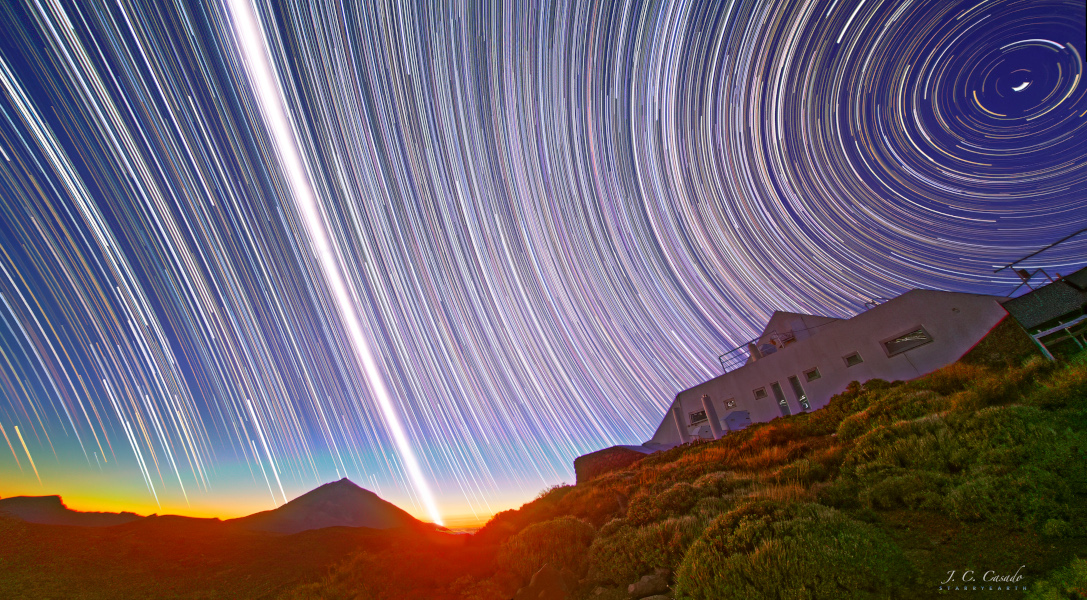
The defining astronomical moment of the equinox today is at 14:46 UTC (March 20). That's when the Sun crosses the celestial equator moving north in its yearly journey through planet Earth's sky, marking the beginning of spring for our fair planet in the northern hemisphere and fall in the southern hemisphere. Then, day and night are nearly equal around the globe. In fact, both day and nighttime exposures from a spring equinox at the Observatorio del Teide in Tenerife, Canary Islands, Spain, are used in this composited skyscape. Over 1,000 images were taken with a fisheye lens and merged in the ambitious equinox project. The apparent motion of the Sun setting along the celestial equator on the equinox date follows the bright linear, diagonal track from the sequence of daytime exposures taken over 6 hours. After sunset, nighttime exposures recorded startrails, with the celestial equator as a linear track and concentric arcs circling the north celestial pole near Polaris at upper right and the south celestial pole beyond the lower left edge (and below the Teide horizon). The foreground includes the distant Teide volcano peak and the observatory's pyramid-shaped solar laboratory building.
NASAI'm looking for sponsors to support my open source development, I appreciate your support! :)


