Stop paying your LLM to re-read the conversation.
Drop-in proxy · OpenAI-compatible · Up to 4x token reduction
Built by teamCookie()
Every API call sends the full conversation. Turn 40 means the model re-reads 39 turns it already processed. You pay for all of them.
Turn  1 ──────    50 tokens    ■
Turn  5 ──────   450 tokens    ■■■■■
Turn 10 ──────  1800 tokens    ■■■■■■■■■■■■■■
Turn 20 ────── 4,800 tokens    ■■■■■■■■■■■■■■■■■■■■■■■■■■■■■■■■
Turn 40 ────── 12000 tokens    ■■■■■■■■■■■■■■■■■■■■■■■■■■■■■■■■■■■■■■■■■■■■■■■■■■
                                                                  ↑ you pay for this
Three approaches exist. All are broken:
| Approach | What it does | What breaks |
|---|---|---|
| Full History | Send everything | Tokens explode. Cost explodes. |
| Summarization | Compress to a paragraph | Decisions vanish. Detail is lost. |
| Top-K RAG | Retrieve scattered chunks | Reasoning continuity is shattered. |
It sits between your app and the LLM. It intercepts the full conversation, figures out what the model actually needs, and forwards a minimal context window -- preserving the reasoning chain the model depends on.
What the model sees at Turn 20:
Without Lethus (4,800 tokens):                 With Lethus (1,200 tokens):
┌──────────────────────────────────────┐        ┌──────────────────────────────────────┐
│  Turn  1: "Plan a trip to Japan"     │        │  [State Doc - 180 tokens]            │
│  Turn  2: "Sure! Here are ideas..."  │        │   Summary of trip: budget, dates,    │
│  Turn  3: "What about budget?"       │        │   decisions made so far...           │
│  Turn  4: "For budget travel..."     │        │                                      │
│  Turn  5: "How about hostels?"       │        │  Turn  7: "Budget is $3000 total"    │
│  Turn  6: "Great choice. Here..."    │        │  Turn  8: "Let's split it: $1200     │
│  Turn  7: "Budget is $3000 total"    │        │           flights, $1000 stay..."     │
│  Turn  8: "Let's split it..."        │        │  Turn  9: "Sounds good, booked."     │
│  Turn  9: "Sounds good, booked."     │        │                                      │
│  Turn 10: "What about food?"         │        │  Turn 18: "Book the Airbnb?"         │
│  Turn 11: "Here are options..."      │        │  Turn 19: "Yes, great choice."       │
│  Turn 12: "Let's go street food"     │        │  Turn 20: "What's the total budget?" │
│  Turn 13: "Perfect. Also..."         │        └──────────────────────────────────────┘
│  Turn 14: "What about transit?"      │           ↑ decisions preserved
│  Turn 15: "Get a JR Pass..."        │           ↑ reasoning chain intact
│  Turn 16: "Done. Now activities?"    │           ↑ 75% fewer tokens
│  Turn 17: "Here are top spots..."    │
│  Turn 18: "Book the Airbnb?"         │
│  Turn 19: "Yes, great choice."       │
│  Turn 20: "What's the total budget?" │
└──────────────────────────────────────┘
The model gets the state doc (what's been decided), the budget decision span (contiguous, not scattered), and the recent turns. Everything it needs. Nothing it doesn't.
# Before -- direct to LLM
client = openai.OpenAI(api_key="sk-...")

# After -- through Lethus
client = openai.OpenAI(base_url="http://localhost:8000/v1", api_key="sk-...")
Same endpoint. Same request format. Same response schema. Streaming works.
Every response comes back with metadata:
X-Lethus-Conversation-Id:   a1b2c3d4-...
X-Lethus-Reduction-Percent:  72.3
X-Lethus-Intent:             RECALL
X-Lethus-Processing-Ms:      23
Message in
    │
    ├── 1. Intent ──────── RECALL | CONTINUATION | CLARIFICATION | NEW_TOPIC
    │
    ├── 2. Retrieve ────── Embed query → vector search → similar turns
    │
    ├── 3. Z-Score ─────── Normalize scores → noise drops below zero
    │
    ├── 4. Boost ───────── Upweight decisions, issues, resolutions
    │
    ├── 5. Kadane ──────── Find optimal contiguous span
    │
    └── 6. Budget ──────── Trim to token limit
    │
    ▼
LLM receives only what matters
    │
    ▼
Response out + async writeback
Intent routing means cheap queries stay cheap:
| Intent | What it means | Strategy | Cost |
|---|---|---|---|
CONTINUATION |
Follow-up to last message | Last 3 turns | Near zero |
CLARIFICATION |
"What do you mean?" | Last assistant response | Minimal |
NEW_TOPIC |
Subject change | State doc + recent turns | Low |
RECALL |
"What did we decide about...?" | Full retrieval pipeline | Worth it |
Standard RAG retrieves the top-K most similar chunks. They're scattered across the conversation. The model sees fragments without the connective tissue between them.
Top-K RAG (scattered):
  Turn 2 ██░░░░░░░░░░░░░░░░░░░░░░░░░░░░░░░░░░░░░░░░░░░░░░
  Turn 7 ░░░░░░██░░░░░░░░░░░░░░░░░░░░░░░░░░░░░░░░░░░░░░░░
  Turn 15 ░░░░░░░░░░░░░░██░░░░░░░░░░░░░░░░░░░░░░░░░░░░░░░░
  Turn 28 ░░░░░░░░░░░░░░░░░░░░░░░░░░░░██░░░░░░░░░░░░░░░░░░
  Turn 33 ░░░░░░░░░░░░░░░░░░░░░░░░░░░░░░░░░░██░░░░░░░░░░░░
         ↑ five fragments, no connecting context

Lethus + Kadane (contiguous):
  Turn 6 ░░░░░░████████████░░░░░░░░░░░░░░░░░░░░░░░░░░░░░░░
  Turn 7          ↑ coherent reasoning thread with full context
  Turn 8
  Turn 9
  Turn 10 ░░░░░░░░░░░░░░░░░░░░░░░░░░░░░░░░░░░░░░░░░░░░░░░
Kadane's maximum subarray algorithm finds the contiguous span with the highest cumulative signal. Multi-span variant finds up to 3 non-overlapping windows. The model reads a coherent thread, not a collage.
| Without Lethus | With Lethus | ||
|---|---|---|---|
| Input tokens/month | 640M | ~430M | -33% |
| Monthly cost | $3,200 | $2,150 | |
| Monthly savings | ~$1,050 | ||
| Annual savings | ~$12,600 |
800M tokens/month, 80/20 input-output split, $5/M input pricing, Claude Opus 4.6.
Z-Score Normalization -- making similarity scores meaningful
Raw cosine similarity scores cluster in a tight band (0.82 -- 0.89). The difference between relevant and irrelevant is buried at the third decimal. Threshold-based filtering can't see it.
Z-score normalization transforms raw scores into "standard deviations from the mean." Relevant turns jump to +1.5, +2.0. Noise drops below zero. Kadane's gain threshold now works consistently across any query, any conversation length.
Changelog Boosting -- semantic importance beyond embeddings
Some turns matter because of what was decided, not what was said. "Let's go with PostgreSQL" has low embedding similarity to a question about database performance -- but it's the most important turn in the thread.
Lethus tracks a structured changelog: DECISION, UPDATE, ISSUE, RESOLUTION, CONTEXT. Turns with changelog entries get boosted (+1.0). Their neighbors get a smaller boost (+0.3), because the reasoning leading to a decision matters too.
State Document -- living memory of the conversation
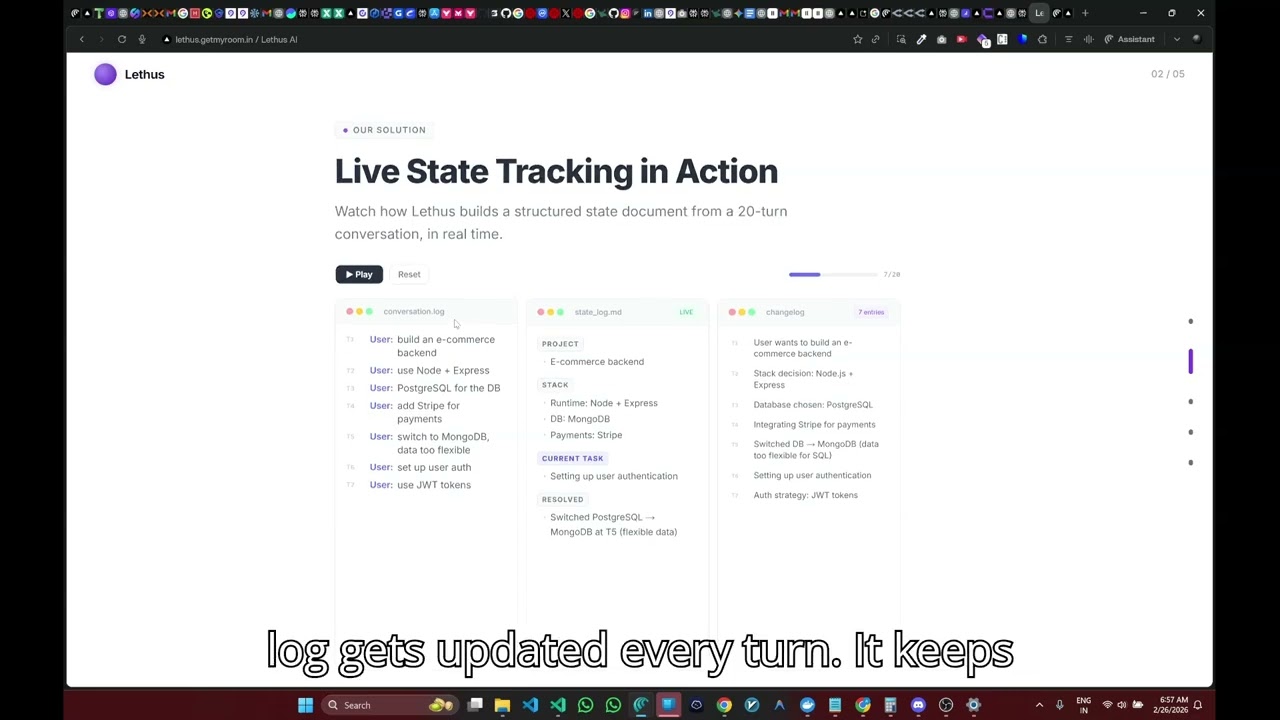
Every N turns (default: 3), an LLM regenerates a structured summary of the conversation. This state doc captures the current understanding -- goals, decisions, open questions, resolved issues -- without replaying the full history.
For NEW_TOPIC intents, the state doc provides grounding context without expensive vector retrieval. It's the difference between "I know nothing about this conversation" and "here's where we stand."
Cold Path -- async, non-blocking
After every response, Lethus fires an async writeback:
- Store turns -- user + assistant messages --> PostgreSQL + Milvus embeddings
- Generate changelog -- LLM extracts decisions, issues, resolutions from the exchange
- Refresh state doc -- every N turns, regenerates the structured summary
The hot path stays fast. The cold path keeps the knowledge base current.
flowchart LR
    App["Your App"] -->|same API| L["Lethus"]
    L -->|minimal context| LLM["Any LLM"]
    L <--> PG[("Postgres")]
    L <--> MV[("Milvus")]
    L -->|embed| E["Embedding API"]

    style App fill:#3b82f6,color:#fff
    style L fill:#4f46e5,color:#fff
    style LLM fill:#059669,color:#fff
    style PG fill:#f59e0b,color:#000
    style MV fill:#f59e0b,color:#000
    style E fill:#8b5cf6,color:#fff
Everything runs locally via Docker Compose. PostgreSQL stores conversations + changelogs. Milvus stores embeddings. Any OpenAI-compatible embedding API works.
| Technology | |
|---|---|
| Backend | Node.js · Express 5 · TypeScript |
| Database | PostgreSQL 16 · Prisma ORM |
| Vector DB | Milvus 2.6 (etcd + MinIO) |
| Embeddings | Any OpenAI-compatible API (default: text-embedding-3-small) |
| Frontend | Next.js 16 · React 19 · Tailwind CSS 4 |
| Infra | Docker Compose |
Prerequisites: Node.js >= 18, Docker + Docker Compose, any OpenAI-compatible API key
git clone https://github.com/0xteamCookie/Lethus.git && cd Lethus# Install
cd backend && npm install && cd ../frontend && npm install
# Configure
cd ../backend && cp .env.example .env
# Edit .env -- set your API keys and upstream LLM URL
# Infrastructure
docker compose up -d
# Initialize
npm run db:generate && npm run db:migrate && npm run init:milvus
# Run
npm run dev # backend :8000
cd ../frontend && npm run dev # frontend :3000Verify: http://localhost:8000/health · Chat: http://localhost:3000/chat · Presentation: http://localhost:3000/present
Configuration
All tuning via environment variables (see .env.example):
| Variable | Default | What it does |
|---|---|---|
COLD_START_THRESHOLD |
5 |
Turns before retrieval pipeline activates |
RETRIEVAL_TOKEN_BUDGET |
2000 |
Max tokens for retrieved context |
RECENT_TURNS_COUNT |
3 |
Always-included recent turns |
KADANE_THETA |
1.0 |
Span selection sensitivity |
GAIN_SHIFT |
0.6 |
Baseline for gain scores |
CHANGELOG_BOOST |
1.0 |
Score boost for decision turns |
CHANGELOG_NEIGHBOR_BOOST |
0.3 |
Boost for adjacent turns |
STATE_DOC_UPDATE_INTERVAL |
3 |
Turns between state doc refresh |
Observability API
GET  /conversations                     # list all
GET  /conversations/:id                 # conversation details
GET  /conversations/:id/turns           # full turn history
GET  /conversations/:id/changelog       # decision log
GET  /conversations/:id/state           # current state doc
Data Model
erDiagram
    Conversation ||--o{ Turn : "has many"
    Conversation ||--o{ ChangelogEntry : "tracks"
    Conversation ||--o| StateDoc : "summarizes"
- Turn -- messages with token counts, embedded into Milvus
- ChangelogEntry -- decisions, issues, resolutions (supersedable)
- StateDoc -- living summary, regenerated every N turns
Scripts
npm run dev              # Start dev server
npm run db:migrate       # Run Prisma migrations
npm run db:generate      # Regenerate Prisma client
npm run init:milvus      # Create Milvus collection
npm run reset:milvus     # Drop and recreate collection
npm run verify           # Verify all connections
npm run test:services    # Run service tests
npm run demo             # Run a demo conversation